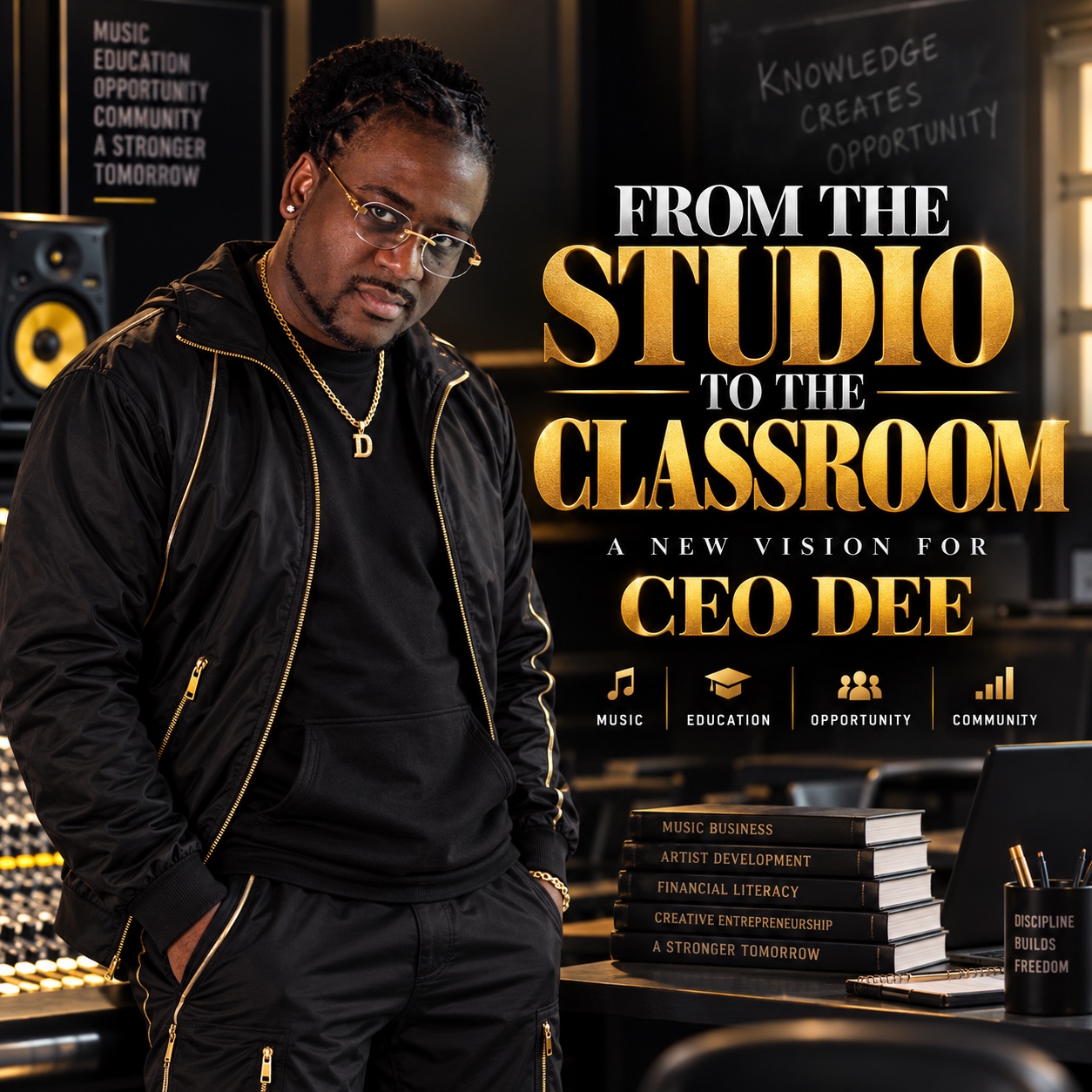
From the Studio to the Classroom: A New Vision for CEO Dee
How an invitation to a Go Legit recording session became a hands-on experience for University of Florida students—and helped me recognize a new direction for my own work.
I thought I was doing my cousin a favor.
I wasn’t developing a business model. I wasn’t planning an educational program. I was focused on my record label, Go Legit Entertainment, and doing what I normally do: bringing people into the studio and making things happen.
But sometimes you do something without recognizing the full value of it until years later.
That is what happened when I invited Dr. David A. Canton to one of my recording sessions. One invitation eventually led to a studio full of University of Florida students, an original song, and a finished release.
At the time, I saw it as another experience I helped put together. Looking back, I see something I want to offer beyond that one room.
It started with a Go Legit session
My recording sessions have never been just one artist standing in a booth while everybody else sits quietly.
When I bring the Go Legit roster and team together, there might be artists, engineers, videographers, photographers, and people I invited simply because I wanted them to experience what we were building. Sometimes there is food. Other sessions include musicians, and we are creating the music right there.
My sessions can feel like a party. But make no mistake—we are working.
That was the environment I invited my cousin into.
Dr. David A. Canton is an associate professor at the University of Florida whose work spans African American history and African American Studies. His teaching includes the history of hip-hop music and culture. But before any of those titles, he is family. I wasn’t inviting him as part of a formal collaboration. I wanted him to come hang out and see what I was doing.
The session was at Pulp Arts, a recording and creative space in Gainesville. It was his first time seeing me run a Go Legit session firsthand. He got to observe the operation—the people, the music, and how I brought everything together.
One detail still makes me laugh.
There was a song from one of my artists that I would describe as ratchet. Out of everything we played, that was one of the records David really liked.
Here I was, looking at him as this serious, accomplished professor, and his reaction caught me off guard. My brother, DJ Terrah, was there too, and he was just as surprised.
We had a good time. I didn’t leave that session thinking it was about to become something else.
Then, sometime afterward, David asked whether he could bring his students.
I wanted them to do more than watch
I said yes.
I didn’t look at his request as a business opportunity. My cousin had come to support what I was doing, and now he wanted his students to experience it. I was happy to make that happen.
But I also knew I didn’t want them to come all that way just to look around a studio.
I wanted them to participate.
I organized the session and arranged the studio time. Then I sent David a beat ahead of the visit so the students could write to it. They had a couple of months to prepare. When they arrived, the plan was for anyone who wanted to participate to get in the booth and record.
David had asked to bring his students to a session. He hadn’t asked me to turn the visit into an entire recording project.
That part was me.
When I take something on, I tend to go all out. I wanted them to have a real experience—not just hear me explain what a studio session was like.
The studio became the classroom
When the students arrived at Pulp Arts, I talked with them about what it takes to record a song and gave them an introduction to the music industry.
Their questions showed me how different their starting points were. Some already knew quite a bit. Others were being introduced to things they had never really considered.
That was part of what made it interesting for me. I wasn’t talking to a room full of artists who were already familiar with the process. I was sharing something I knew with people who were approaching it from different backgrounds and levels of experience.
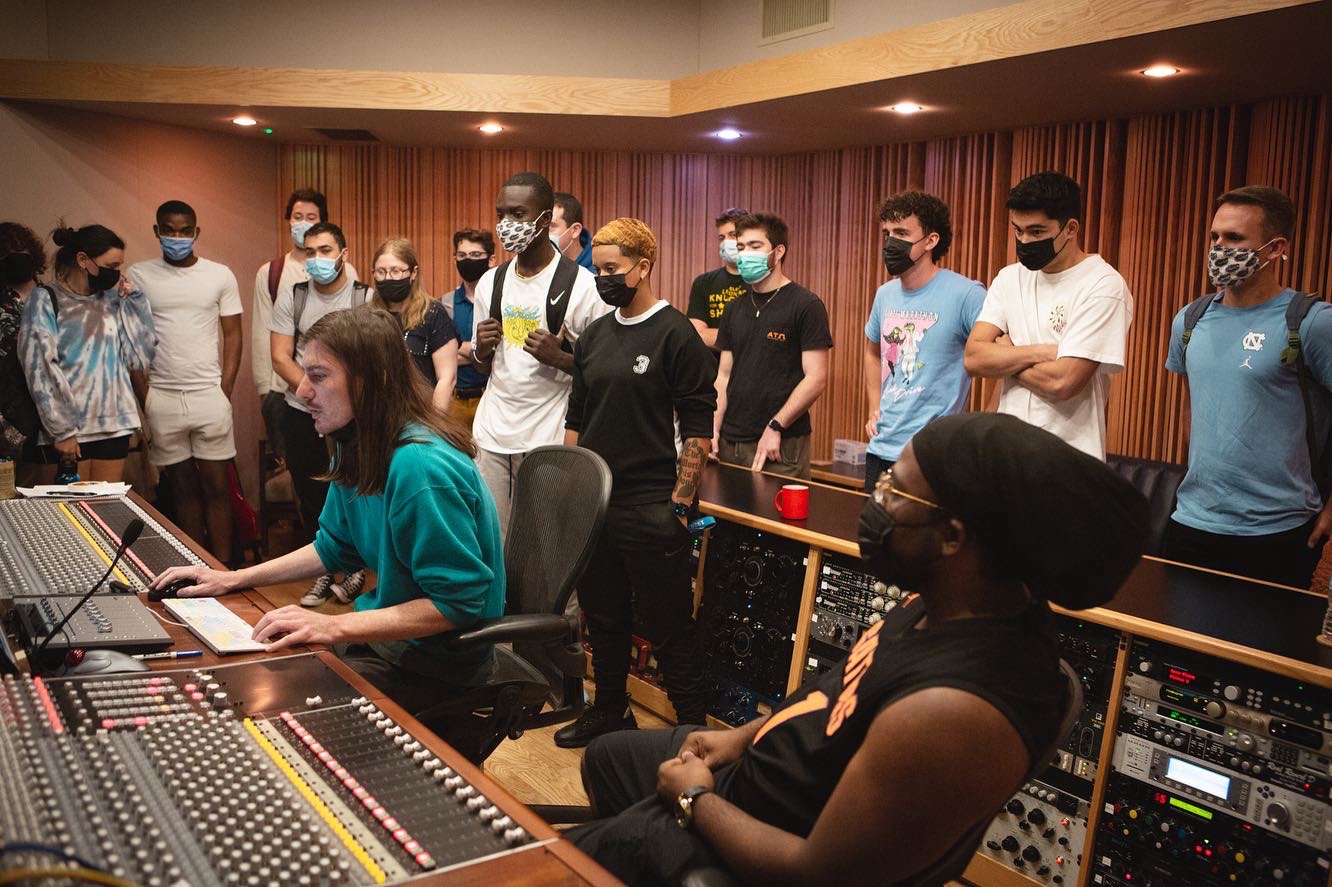
Photo: Abigail Clark / Pulp Arts
Then we got into the recording.
Each student who wanted to be on the song stepped into the booth. Their classmates watched through the glass as they performed what they had written.
There was laughter. There was music. They got to hear their own ideas played back through the studio speakers.
We were having a good time, but we were also making something.
For me, that is the value of an experience like this. You can talk about recording a song, but getting into a professional studio and actually doing it gives someone a different way to understand the process.
It also gives them room to explore.
They might discover that they want to keep recording. They might realize there is more involved than they expected. They might simply enjoy trying something they would not otherwise have had the opportunity to do.
They don’t have to decide their entire future that day. They get a chance to find out what the experience feels like for themselves.
And then David surprised me again.
He had a verse, too.
I wasn’t expecting him to be on the record, but we ended the song with him. His students had their turns, and their professor delivered the closing verse.
I thought that was a nice touch.
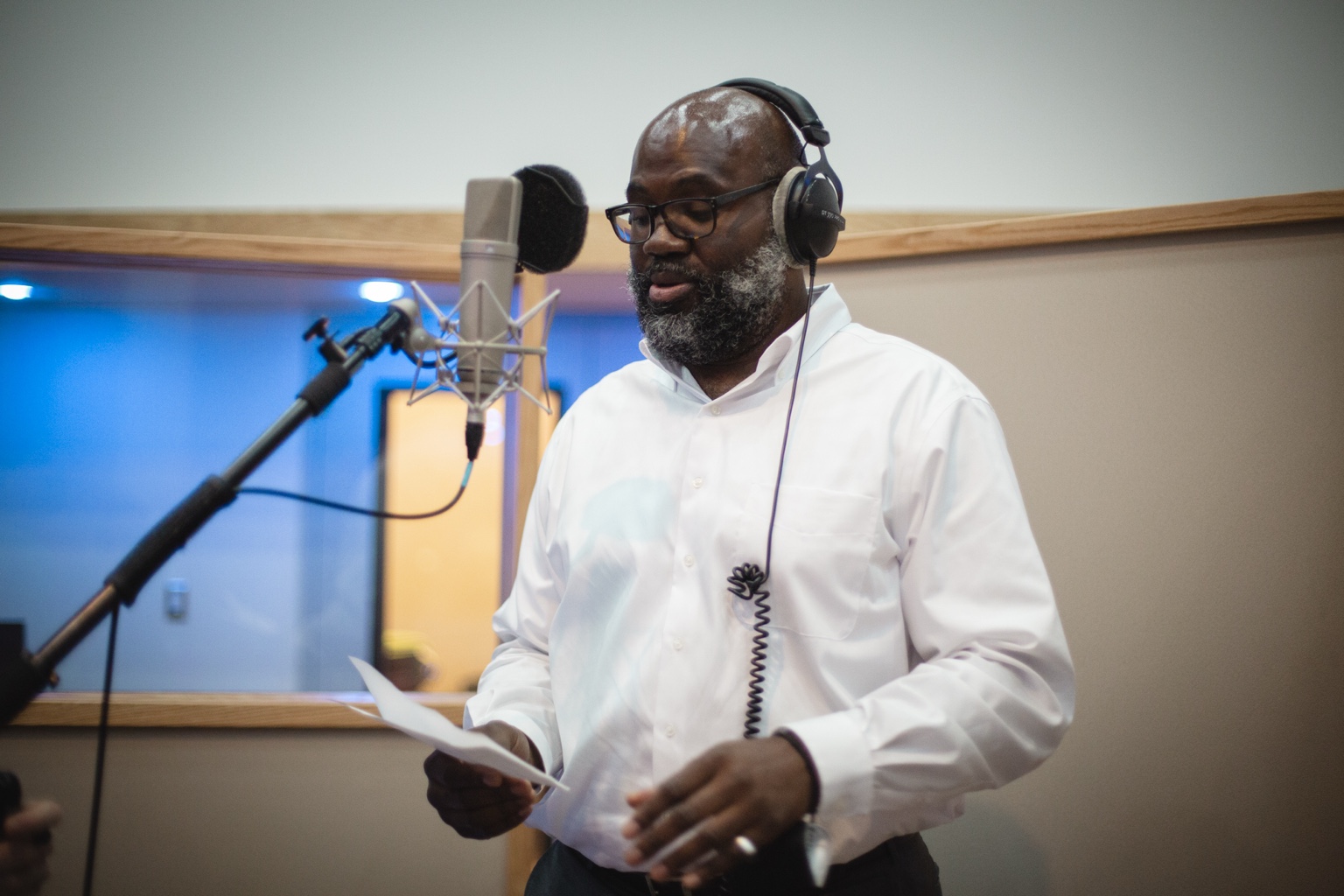
Photo: Abigail Clark / Pulp Arts
We didn’t stop when the session ended
After the recording, I kept going.
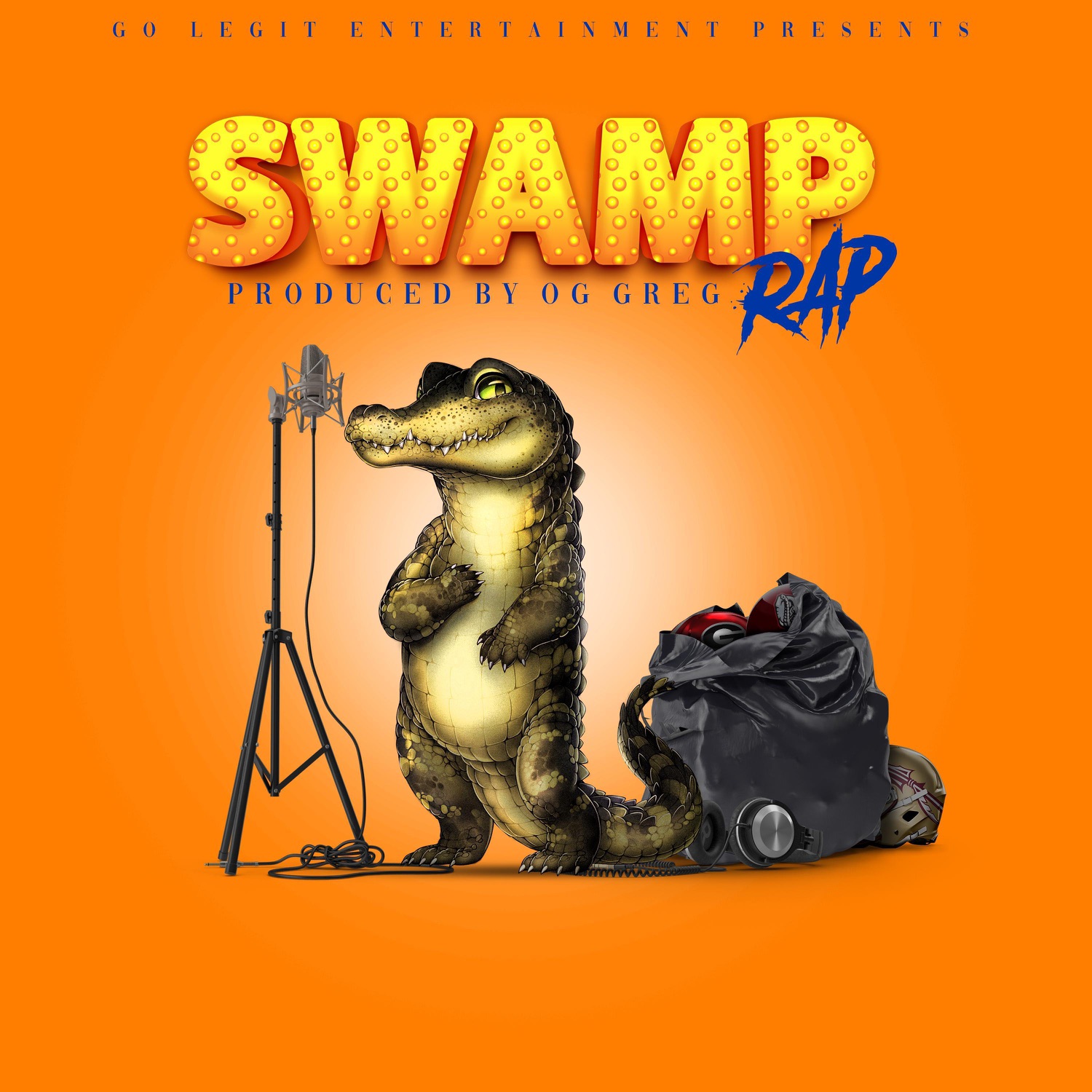
I had the song professionally mixed and mastered. I arranged the artwork. Then I released it through Go Legit Entertainment under the artist name UF Students.
The record became “Swamp Rap,” released on July 4, 2022.
I also made a clean version. Some of the verses needed editing, and I wanted that option available for a project involving university students. A separate release, “Swamp Rap (Radio Edit),” followed in 2022.
What began as a request to visit a session had become a finished record.
The students had the opportunity to prepare their contributions, record them in a professional environment, and become part of a song that was actually released.
That mattered to me. I didn’t want the experience to end with something sitting unfinished after everybody went home.
Go Legit Entertainment
Swamp Rap (Radio Edit)
UF Students
Clean Version · Released August 1, 2022
Still, even after doing all of that, I wasn’t looking at it as a service I could build a business around.
I was thinking: that was fun. I’m glad we did it.
Recognizing the value in what I already do
At that point in my life, my attention was on Go Legit and the careers of the artists on the label.
The artists came first. The label came first. I wasn’t spending much time thinking about what I could offer under my own name.
Over the years, people have brought up things I’ve done and tried to get me to recognize their significance. A lot of the time, my reaction was that I was just doing what I do.
Putting a session together. Bringing the right people into a room. Sharing what I know. Taking an idea further than somebody expected.
Because those things felt normal to me, I didn’t always recognize them as something other people might need.
When my circumstances changed and I had to focus more on building CEO Dee, I started looking at those experiences differently.
That student session was one of them.
I had organized an experience, taught from my professional knowledge, helped people participate in a creative process, and carried the project through to a release.
I enjoyed doing it. And from what I saw in the room—the participation, the questions, the laughter—I felt it was a worthwhile experience for the students, too.
Why should that stop with something I did for my cousin?
Bringing the CEO Dee Curriculum to Your Organization
That question helped me recognize how the CEO Dee Curriculum connects with an experience I already offer: the CEO Dee Studio Experience. It brings together my work as a record-label owner, creative organizer, and media-company owner in a hands-on educational setting.
The CEO Dee Studio Experience, Artist Development Workshop, and Custom College, Youth & Nonprofit Programs are already listed on my website. Organizations can review those options and request a proposal built around their audience and goals.
The original experience involved college students. I also see possibilities for middle-school and high-school students, with the content and approach adapted to their ages and the goals of the organization.
The purpose is to give participants access to a professional creative environment where they can learn, ask questions, and try the process themselves.
That could take the form of a hands-on workshop, a studio experience, or a series of sessions. Depending on the project and the resources available, I can bring in engineers and other industry professionals to contribute their perspectives.
The experience can also grow beyond what we did the first time.
That first student project centered on audio. Since then, my work has expanded into media, which creates the opportunity to include video, document the creative process, and introduce participants to another side of how music and content come together.
I’m not talking about promising everybody a music career.
I’m talking about giving people an opportunity to explore one—to find out whether recording, creating, or working in this environment is something they want to pursue.
Some may leave wanting to do more. Others may leave with a better understanding of the work behind a finished song.
Either way, they have had the chance to step into a space they might not otherwise experience.
I would love to help make that possible.
An invitation to build the next experience
I love being in the studio—with artists, musicians, students, and people who are trying something for the first time.
That part hasn’t changed.
What has changed is my understanding that the experience I know how to create has value beyond my own label and the people already around me.
What started as a favor for my cousin is now something your organization can explore with me.
Colleges, schools, nonprofits, and youth and community programs can visit my Workshops, Speaking & Educational Experiences page to learn about the CEO Dee Studio Experience and the other available programs. You can review the learning areas and formats, then use the Request a Proposal form to tell us who you serve and what you want participants to take away.
The form gives you room to share your goals, audience, preferred dates, location, budget, and any studio or production requirements. You do not have to know the exact format yet—there is an option for organizations that need a consultation.
From there, we can discuss whether the experience is the right fit and what a custom program could look like. Recording, video, guest professionals, and other production elements depend on the scope and budget we agree on; they are not automatically included in every workshop.
I love creating in the studio. Now I want to help more people experience what is possible there—as CEO Dee.
Bring the CEO Dee experience to your organization.
Explore the CEO Dee Studio Experience, artist-development workshops, and custom programs for colleges, schools, youth groups, and nonprofits. Review the options and start a conversation about your organization’s goals.
Request a ProposalPrefer to email? Contact the Office of CEO Dee at office@ceodee.com.